
 Indoor
 Greenhouse
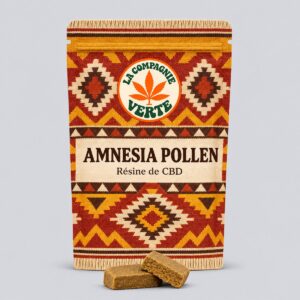
 Hash
Sativa or indica: what’s the difference?
Two botanical words that became labels: what they describe, what studies say about them, and how to choose a flower by taste.
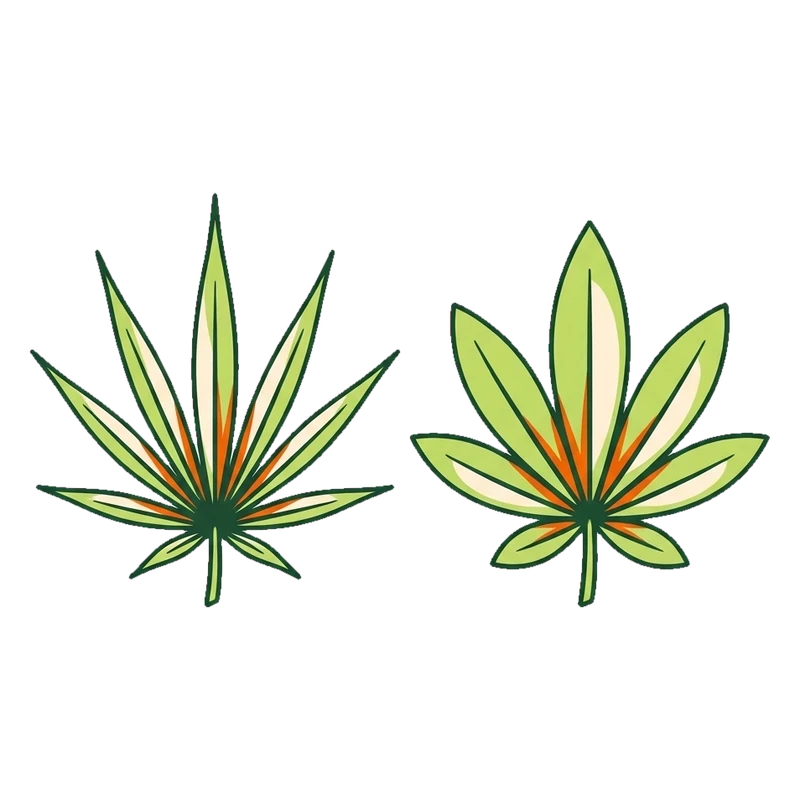
Sativa or indica: the difference comes first from the plant, not from what you feel. In everyday use, “sativa” means a tall plant with thin leaves and “indica” a stockier plant with broad leaves. Today almost everything is crossed, and studies show these labels describe the genetics and chemistry of a flower poorly. Here, no promise of any effect: we give you what the research says, and how to choose a flower by taste.
Sativa or indica: the difference in one sentence
They are two botanical words that have become two shop labels. They describe the look of the plant and the aroma of the flower, but they say nothing reliable about its composition or about what you will get from it.
| What we look at | “Sativa” (common description) | “Indica” (common description) |
|---|---|---|
| Look of the plant | Tall, slender | Smaller, bushy |
| Leaves | Thin | Broad |
| Origin of the label | Originally a fibre hemp from Europe (Linnaeus) | Plants from Afghanistan grown for hash |
| Aromas linked to the label (2021 study) | Bergamotene and farnesene (tea and fruit notes) | Myrcene (earthy notes), guaiol, eudesmols |
Where the two words come from
Both names come from botanical classification. A 2018 review explains that botanists applied these names to their collections fairly arbitrarily between the 18th and 20th centuries. That is how today's “sativa” and “indica” labels came about, and they do not match the official botanical names. And because the two types are crossed everywhere, their differences have become “almost meaningless”, writes the author (McPartland, 2018).
A surprising detail: Linnaeus's “sativa” was a fibre hemp from Europe, with no intoxicating use. The plants from Afghanistan grown for hash, short and heavily branched, were only later filed under “indica”, even though Lamarck, who named that species, did not know them (McPartland, 2018). The 2021 study notes for its part that Afghanistan is considered the region of origin of “indica” varieties (Watts et al., 2021).
What studies show about the labels
- Genetics: a study published in Nature Plants (2021) compared 297 samples for their terpenes and cannabinoids, 137 of them genotyped on more than 116,000 markers. Samples labelled sativa and indica were genetically indistinguishable across the genome. Two samples with the same variety name were often as far apart as two varieties with different names (Watts et al., 2021).
- Chemistry: a 2022 study of commercial samples from six US states concludes that the labels do not consistently match the chemical diversity observed (Smith et al., 2022).
- A researcher's view: the neurologist Ethan Russo explains that you cannot guess the chemical content of a plant from its height, its branching or the shape of its leaves. Only an analysis tells you what is inside (interview, 2016).
Aromas: where the label does say something
The 2021 study does still find a modest link between the label and a few aroma molecules. The “sativa” label goes with bergamotene and farnesene, which give tea and fruit notes. The “indica” label goes mostly with myrcene, with earthy notes: its concentration explains about a fifth of the variation in the label. So the two labels are, at best, a hint about aroma. Not a measure of what is in the flower.
One point does not move, whatever the label: in Switzerland, it is the total THC content that decides whether a product is legal, with a limit of 1% (OTStup-DFI).
Our flowers sorted by aroma
Rather than a sativa or indica ranking, here is what each product page shows: how it was grown and the aromas.
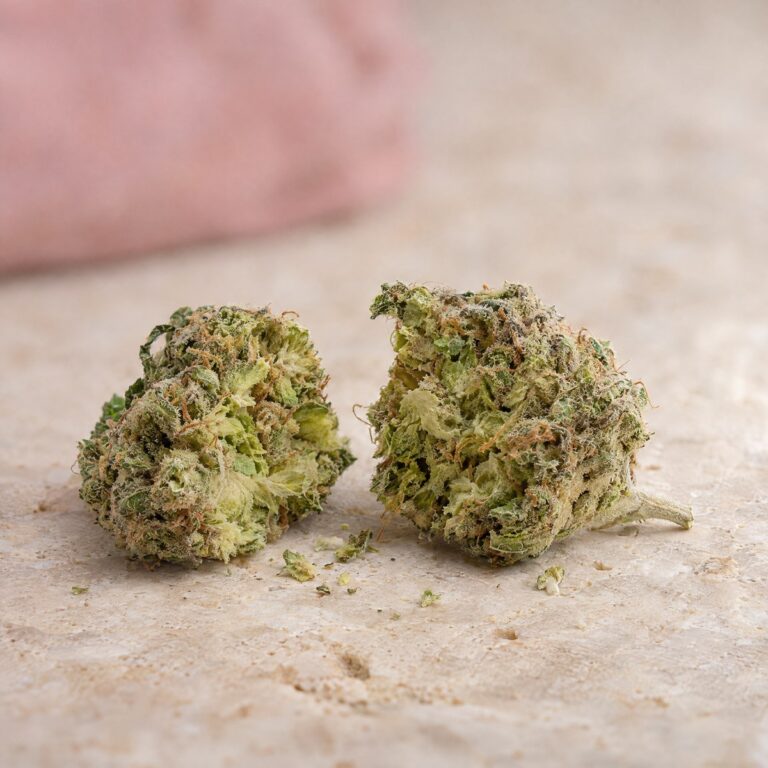
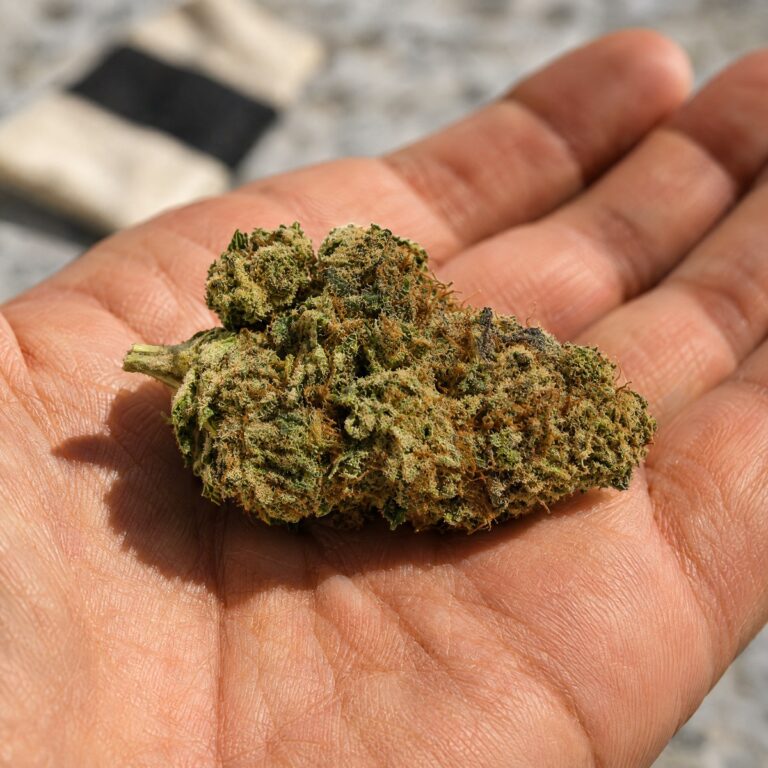
| Flower | Cultivation | Aromas |
|---|---|---|
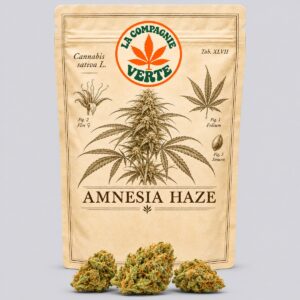
| Amnesia Haze | Indoor | Lemon, pepper |
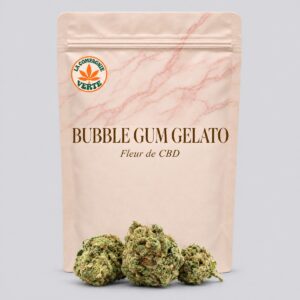
| Bubble Gum Gelato | Indoor | Bubblegum, cream |
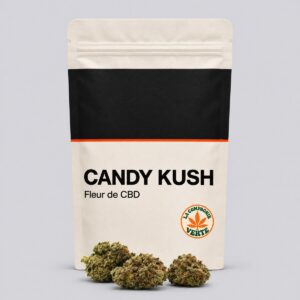
| Candy Kush | Greenhouse | Sweet candy, earth |
| Gravity Zero | Greenhouse | See the product page |
The names themselves are often placed on one side or the other by seed breeders: “Haze” rather on the sativa side, “Kush” rather on the indica side. That is their label, not an analysis of the flower you receive.
How to choose by taste and size
- Taste first: citrus, candy, earth, spice. The aromas on the product page tell you more than the label.
- How it was grown: indoor or greenhouse mainly changes the look, the consistency and the price.
- The size: flower or hash is another choice, with its own criteria.
We promise you no effect, for either label. Our flowers are grown in Switzerland, with nothing added, shipped from Valais, and sold to people aged 18 and over.
Frequently asked questions
What is the difference between sativa and indica?
In everyday use: a tall plant with thin leaves for sativa, a stockier plant with broad leaves for indica. Studies show these labels describe the real genetics and chemistry of a flower poorly.
What effect does sativa have?
We cannot tell you, and nobody can guarantee it. The label does not let you predict the composition of a flower, and we promise no effect.
Is Haze sativa or indica?
Seed breeders most often place Haze on the sativa side. It is a lineage label, not a measurement.
Is hash sativa or indica?
Hash is made from the plant. The label, when there is one, comes from the starting variety, and as with flowers, it mostly points to an aroma.
Can a flower be 100% sativa or 100% indica?
Rarely. The two types have been crossed everywhere for a long time, which makes their differences “almost meaningless” (McPartland, 2018). When a product page names a type, it generally means the dominant lineage.
Herbal smoking product, sold to those aged 18 and over. Smoking harms your health.
 Your basket is waiting for its first flower.
 Amnesia Haze
 Amnesia Pollen
 Bubble Gum Gelato
 Candy Kush